RacquetX 2026: a turning point for padel in the U.S.
RacquetX 2026 brings together developers, club operators, investors and suppliers at a key moment for padel in the United States.
As the sport expands, conversations at the show are evolving. The focus is no longer only on how fast courts can be installed, but on how they are designed, engineered and certified to perform over time.
Padel is moving from an emerging trend to a professional sports infrastructure, and RacquetX reflects that shift.
From speed to structure: the new U.S. conversation
In early-stage markets, speed and aesthetics often dominate decision-making.
However, as clubs grow and projects scale, new priorities emerge:
- Structural safety
- Engineering calculations
- Compliance with international standards
- Long-term durability and maintenance
This is where the difference between manufacturers and resellers becomes especially relevant.
Manufacturer vs. reseller at RacquetX
At RacquetX, many suppliers present padel court solutions.
But not all play the same role.
A padel court manufacturer:
- Engineers and calculates the structure
- Controls materials, welding and coatings
- Certifies products under recognized standards
- Takes responsibility from design to installation
A reseller or assembler:
- Distributes third-party systems
- Relies on external manufacturing
- Has limited control over structural performance
For U.S. projects exposed to high usage, wind loads or extreme weather, this distinction directly affects safety, lifecycle costs and reliability.
Why certification is becoming essential
One of the most relevant topics at RacquetX 2026 is certification.
Padel courts are permanent installations that must meet:
- Structural requirements
- Safety criteria for players and spectators
- Inspection and maintenance standards
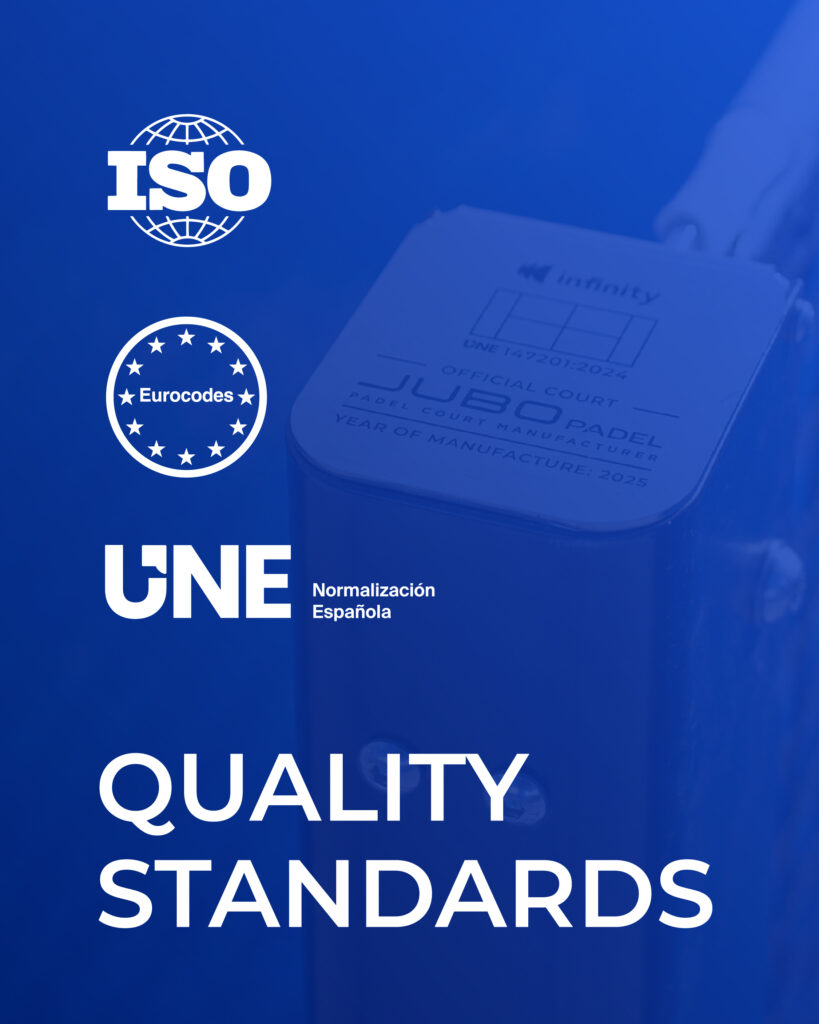
JUBO Padel is the first manufacturer certified under UNE 147201, the European standard regulating the design, manufacturing, installation and inspection of padel courts.
For U.S. developers and clubs, certification means:
- Reduced technical and legal risk
- Verified engineering performance
- Greater confidence for investors and partners
Engineering padel courts for U.S. conditions
Many regions in the U.S. face demanding environmental conditions:
- High wind loads
- Hurricane or tornado exposure
- Coastal corrosion
Standard solutions are not always designed for these scenarios.
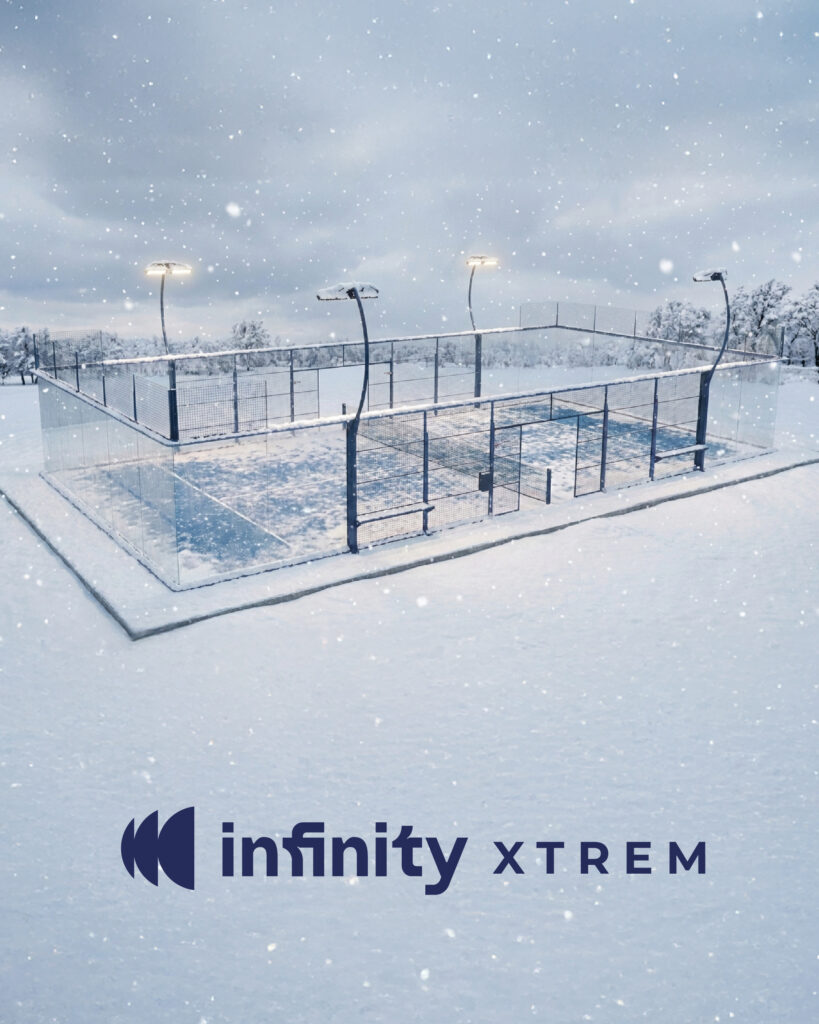
JUBO’s Infinity Xtreme court has been engineered specifically for extreme weather environments, combining optimized structural design with reduced visual impact and lower carbon footprint.
This type of engineering-led approach is increasingly present in conversations at RacquetX.
Experience beyond the trade show
Trade shows are important, but experience matters more.
- 7,000+ padel courts installed worldwide
- Presence in over 80 countries
- Official court partner for international tournaments
This global experience allows manufacturers to adapt solutions to local regulations, climate conditions and usage intensity.
Meet JUBO at RacquetX 2026
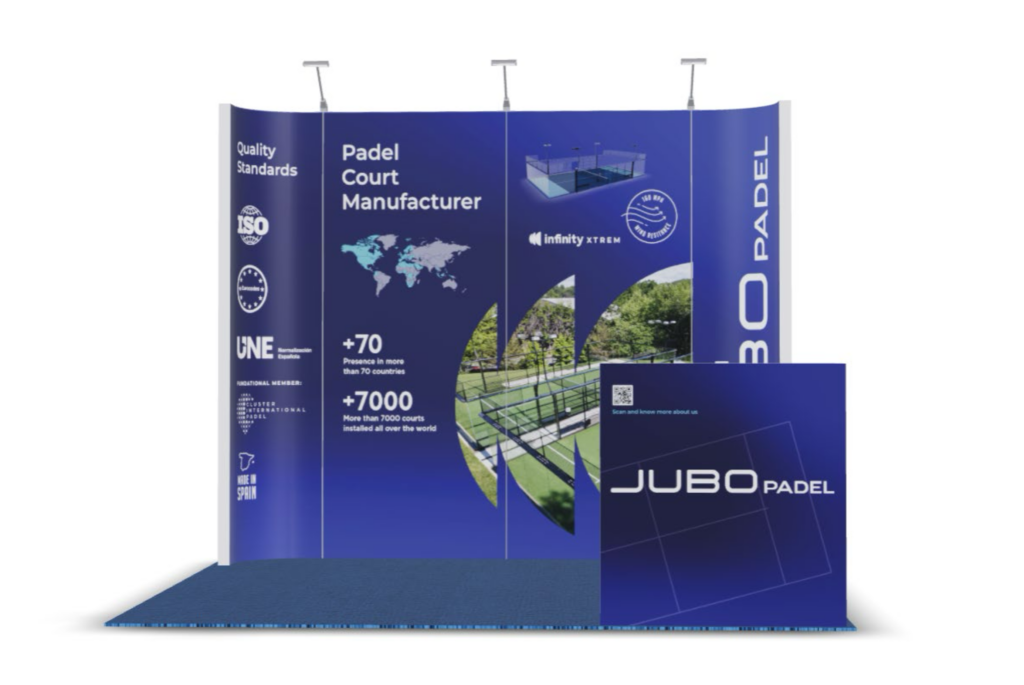
At RacquetX 2026, JUBO Padel will be showcasing how engineering, certification and manufacturing define the future of padel infrastructure in the U.S.
📍 RacquetX 2026 – Fort Lauderdale
📅 March 13–15
📌 Booth 307